

Last Updated: November 24, 2026
Quick Summary
To buy handmade art online with confidence, check the listing for process photos, named materials and exact dimensions, then verify the seller's reviews and identity. Pay through a protected method and photograph the packaging if the piece arrives damaged.
- Look for process photos or video showing the carved block, inked plate or drying rack.
- Check that the listing names the paper, ink and substrate, not just premium materials.
- Confirm whether the piece is an original, limited edition or reproduction.
- Measure the printed image and the paper size, since prints often have a border.
- Pay with a protected method and avoid moving payment off the platform.
Table of Contents
- Why Buying Handmade Art Online Feels Risky, and How to Lower That Risk
- How to Tell If Art Is Handmade
- Questions to Ask an Artist Before Buying Art
- Evaluating the Seller: Ratings, Reviews, and Reputation
- How to Choose Art for Your Home Before You Click Buy
- Buying Art Online Safely: Payment, Shipping, Damage, and Returns
- Choosing Your First Piece From Modern Medieval Press
- Frequently Asked Questions
Buying handmade art online means trusting a photo and a product description from someone you may never meet. This guide walks through how to check the work, the seller and the delivery before you spend your money. The goal is simple: tips for buying handmade art online that help you choose a piece you will still love once it hangs on your wall.
Why Buying Handmade Art Online Feels Risky, and How to Lower That Risk
The risk usually comes from three gaps: the screen cannot show texture, a photo cannot show scale, and a listing cannot show the maker's habits. You cannot run a finger over an ink surface or stand back to see how a print sits in your hallway. Most buyers feel uneasy for exactly these reasons.
You can narrow each gap. Ask for detail shots, check the stated dimensions against a tape measure, and read how the seller describes the process. A seller who explains how a piece was made is usually easier to trust than one who only shows a glossy mockup.
How to Tell If Art Is Handmade
Handmade work carries signs that machine production rarely copies. Hand-carved relief prints show slight variations in ink coverage and line weight. Those differences are a natural part of hand-pulled printmaking.
Use these questions to sort listings quickly:
- Does the listing name the technique, such as linocut or intaglio?
- Are process photos or video included?
- Does the description say how many impressions were pulled, or whether the edition is limited?
- Do close-up images show carved marks and paper texture?
Reading the Listing for Process Details
Read the description the way you would read a recipe. Look for the materials, the steps and the time involved. A listing that says "hand-carved block, individually inked and pressed" tells you far more than "beautiful original art."
Check the product page for the paper type and the image size compared with the paper size. Many prints have a border, so the printed image may be slightly smaller than the sheet.
Spotting Mass-Produced Work Dressed Up as Handmade
Some sellers use the word "handmade" for designs that were digitally produced and printed at scale. Watch for a few warning signs. Identical edition numbers with no variation across photos, stock-looking backgrounds, and vague claims with no process detail all deserve a closer look.
A reproduction is not automatically a problem. Fine art reproductions are a legitimate, affordable option, but the listing should call it a reproduction, not an original.
Questions to Ask an Artist Before Buying Art
Before you pay, send the maker a short message. A clear, friendly reply tells you a lot.
Good questions include:
- What technique was used, and how was the block or plate made?
- What paper and ink were used, and how are they stored?
- Is this an original impression or a reproduction?
- How large is the image, and how large is the paper?
- How should the piece be framed and kept away from direct sunlight?
Keep the replies. They give you a record if the piece arrives different from what you expected.
Evaluating the Seller: Ratings, Reviews, and Reputation
Ratings are a starting point, not a verdict. Read several recent reviews, both positive and negative, and sort them by date so you see how the seller is performing now rather than two years ago. Look for patterns: repeated praise for packaging is encouraging, while repeated complaints about damaged corners, color that did not match the photo, or slow replies deserve attention.
Reading Reviews Like a Buyer, Not a Browser
A five-star review that says only "love it" tells you little. A three-star review that explains exactly what went wrong and how the seller fixed it tells you far more. Pay attention to how the seller responds. A reply that names the specific problem and the specific remedy, a replacement, a refund, a corrected listing, is a stronger signal than a generic apology.
Watch out: a wall of short, identical five-star reviews posted within a few days of each other is a common pattern for review manipulation, and it is worth scrolling past the star average to check the dates.
Verifying That the Seller Is a Real Maker
Before you buy, confirm the seller has a consistent identity across channels. A maker with an about page, a linked studio or process account, and a history of answering questions is easier to verify than an anonymous storefront. Cross-check the seller's name against their other listings and any linked portfolio. If the same photos appear on multiple unrelated storefronts, treat that as a warning sign.
The Authenticity Checklist
Use this checklist before you commit to a piece:
- Process evidence. Look for photos or short video of the work in progress, the carved block, the inked plate, the drying rack. A single glossy mockup is not process evidence.
- Specific materials. The listing should name the paper, the ink, the substrate, and the dimensions. "Premium paper" is not a material specification.
- Production claims. The description should state whether the piece is an original, a limited edition, an open edition, or a reproduction, and how many were made.
- Consistency across photos. The same piece should look the same in the detail shot, the flat shot, and the in-situ shot. If the color shifts dramatically between images, ask which one is closest to the actual piece.
- Seller history. Check how long the seller has been operating, whether they publish clear shipping and return terms, and whether they answer questions before a sale, not only after one.
A reproduction is not automatically a problem. Fine art reproductions are a legitimate, affordable option, but the listing should call it a reproduction, not an original. The checklist is there to catch the mismatch, not to disqualify affordable work.
Independent makers and small businesses often have fewer reviews than large marketplaces. A small number of reviews is not a warning sign on its own. Pair the reviews with the authenticity checklist and the questions in the next section before you decide.
How to Choose Art for Your Home Before You Click Buy
Measure the wall before you shop. Note the width, height and where the piece will sit relative to furniture and light. Dimensions on a product page are only useful if you know your space.
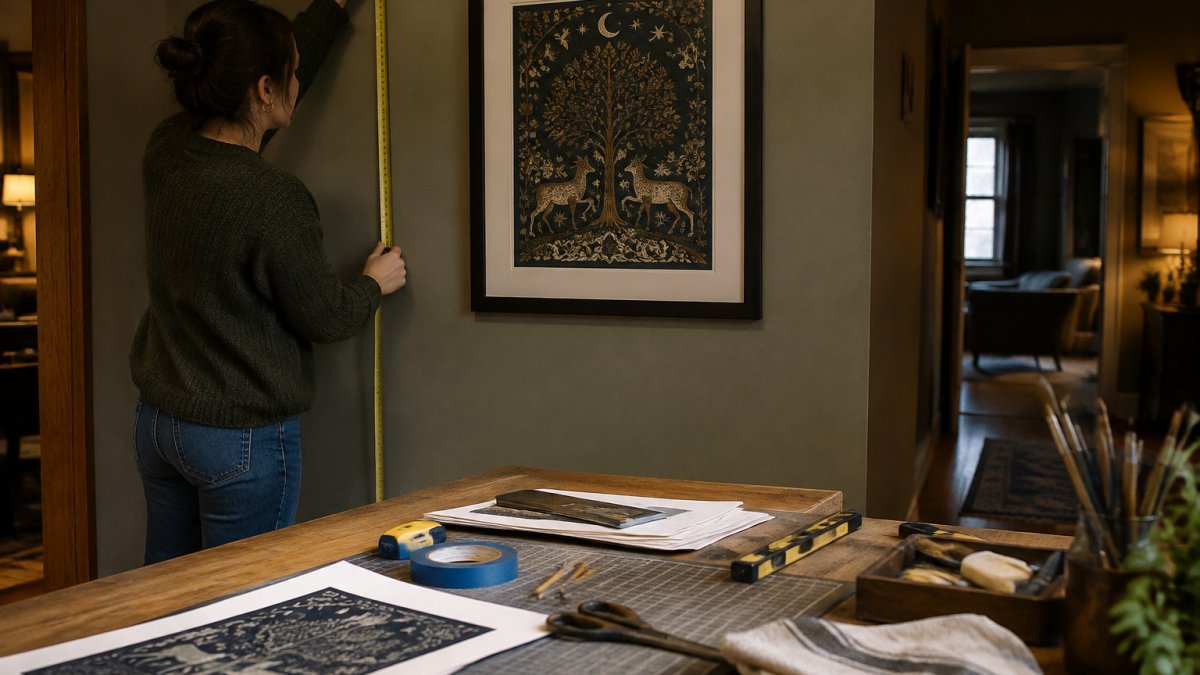
Think about the mood you want. A hallway may suit a tall, narrow print, while a reading nook may suit a small piece that rewards a closer look. For ideas on styling a moody, historical look in a modern apartment, read our practical guide to castlecore aesthetic for modern apartments. If you are still browsing, our roundup of handcrafted literary wall decor pieces can help you compare styles before you decide.
Consider color and framing as well. A black-and-white print can sit comfortably beside warm wood tones, while a bolder ink may need a simpler frame.
Buying Art Online Safely: Payment, Shipping, Damage, and Returns
Most buying guides stop at "use a secure checkout." The practical work is in the details: which payment methods actually give you recourse, what the listing should tell you before you pay, and what to do when a fragile piece arrives in pieces.
Verify the Listing Before You Pay
Before checkout, confirm four things on the product page:
- Dimensions. Check both the image size and the paper or canvas size. Many prints carry a border, so the printed image is smaller than the sheet. Measure your wall and your frame before you order.
- Materials. The listing should name the paper, ink, canvas, or substrate. If it does not, ask.
- Image accuracy. Confirm whether the photo shows the exact piece you will receive or a sample from the edition. For editions, ask for a photo of the specific impression being shipped.
- Color representation. Screens vary. Ask the seller which photo is closest to the true color, especially for pieces with warm browns, deep inks, or metallic finishes.
Watch out: a listing that shows only a digital mockup with no photograph of the physical piece is a common source of disappointment, because texture, sheen, and edge quality cannot be judged from a render.
Payment Security and Buyer Protection
Use payment methods that offer buyer protection, such as major credit cards. Card and platform protections vary, so check your provider's terms before you pay.
Avoid sellers who ask you to move the payment off-platform to a personal transfer, a payment app, or a direct bank transfer. Off-platform payments usually remove the marketplace's protection and make disputes much harder to resolve. If a seller insists on it, treat that as a reason to walk away.
Keep your order confirmation, the listing text as it appeared at purchase, and any messages with the seller. If a dispute arises, that record is what the platform or card issuer will ask for.
Shipping, Packaging, and Insurance
Read the shipping terms before you buy. Confirm the handling time separately from the transit time, because handmade work often has a production window before it ships. For original or limited-edition pieces, ask the seller whether the shipment is insured and who files the claim if something goes wrong.
Fragile and unframed work ships best in rigid packaging. Prints typically travel in sturdy tubes or flat mailers with corner protection; framed pieces need corner guards and cushioning. If the seller's shipping description is vague, ask how the piece will be packed.
Returns and Damage Claims
Confirm the return window, who pays return shipping, and whether the seller accepts returns on made-to-order or commissioned work. The policy should be stated clearly before you buy.
If a piece arrives damaged, photograph the outer box, the packaging, and the artwork before you discard anything. Then contact the seller with your order details and the photos. Report the damage within the window the seller or platform specifies, because late claims are harder to resolve.
The checks below are the ones the article recommends before you pay, and what to do if a piece arrives damaged.
| Check | What to confirm | Why it matters |
|---|---|---|
| Dimensions | Image size and paper size | Prints often have a border |
| Materials | Paper, ink, canvas or substrate named | Vague listings hide quality |
| Image accuracy | Photo shows the exact piece shipped | Editions can vary |
| Payment | Protected method, no off-platform transfer | Keeps marketplace protection |
| Damage | Photograph box and artwork before discarding | Supports a timely claim |
Choosing Your First Piece From Modern Medieval Press
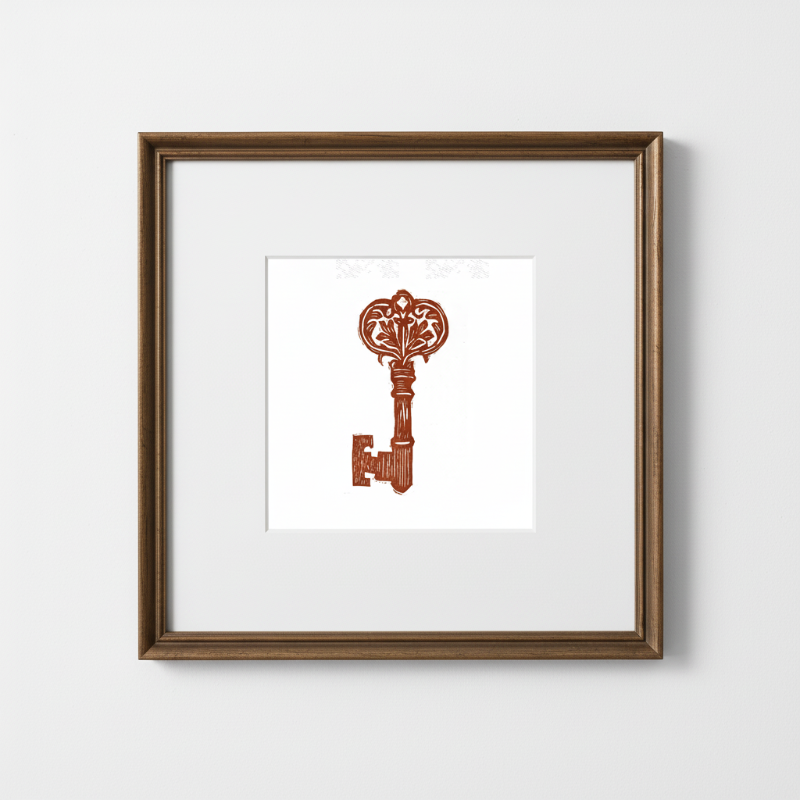
If you are new to collecting, start with a piece that suits your space and budget. Our medieval botanical art prints show how traditional imagery fits everyday rooms, while an original linocut from our collection gives you a hand-carved piece to evaluate in person.
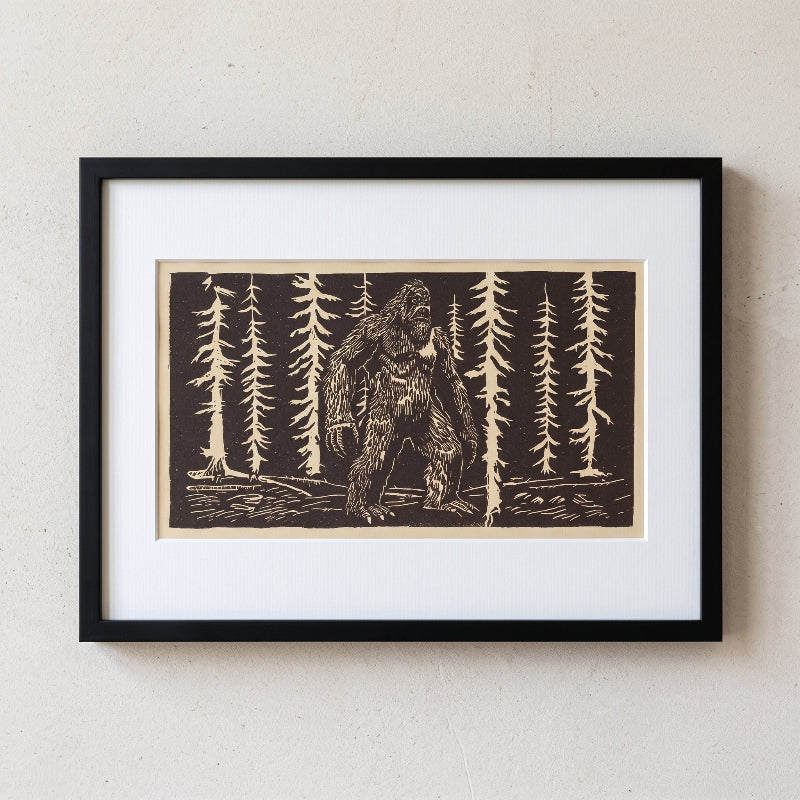
Our Bigfoot linocut print is a good example of a limited edition, with each print created on a different brown background paper. It is priced at $150.00 and is a strong pick for folklore fans who want a collector piece. For a first purchase, look at the size, the process details and the seller's answers to your questions, then decide with confidence.
Frequently Asked Questions
How can you tell if art is genuinely handmade?
Start with the listing. Look for descriptions of the process, such as hand-carved blocks, hand-inking, or hand-pulled prints, and check whether the artist shows the block, the tools, or the studio. Original linocut prints are carved into a block, inked, and printed by hand, so each impression can show small variations in ink and texture. Reproductions are copies of an original artwork, and a good seller will say so plainly. If a listing never describes how the piece was made, ask the seller directly before you buy.
What questions should you ask an artist before buying art online?
Ask what materials and paper were used, whether the piece is an original print or a reproduction, and how the edition is limited. Ask about the actual image size versus the paper size, since a border is common, and whether the piece is framed or unframed. Ask how the work is packed and what protection it gets in transit. A seller who answers these questions clearly is usually easier to trust than one who replies with vague generalities.
What should you look for in an online art seller's return policy?
Read the return and damage policy before you pay. Check whether the seller accepts returns for artwork that arrives damaged, how long you have to report damage, and whether you must return the item at your own cost. Look for clear photos of packaging and a stated process for claims with the carrier. A policy that addresses transit damage in writing is a meaningful sign of a careful seller.
How do you choose the right size artwork for a room?
Measure the wall space and the furniture beneath it before you shop. A common approach is to leave enough room around the frame so it doesn't crowd the wall, and to match the artwork's scale to the room's proportions. For narrow hallways or small apartments, smaller formats such as 5x7 or 8x10 inches often fit better than a large statement piece. Check whether a listed size refers to the image or to the full paper, since the difference affects how much wall space the piece will take up.
