

Last Updated: November 14, 2026
Quick Summary
The best places to buy high-quality, handcrafted gothic fantasy wall art are small artist-run studios where you can trace a piece back to a named maker, a specific technique, and a limited run. At Modern Medieval Press, every piece is crafted by printmaker Rachel Kmecheck using traditional techniques, in small-batch production.
- Original prints show carved marks, ink texture, and slight variations of hand printing.
- Artist studio direct pieces typically cost $20-$150 and come signed in limited editions.
- Vet listings by checking technique, paper and ink specs, edition size, and real photos.
- A limited edition is a fixed run, while an open edition can be reprinted without a set limit.
- Modern Medieval Press prices range from $20 for a linocut to $150 for an intaglio print.
Table of Contents
- What Separates Handcrafted Gothic Fantasy Wall Art From Mass-Produced Decor
- Where to Find Good Fantasy Art Made by Independent Artists
- The Best Place to Buy Wall Art Online for a Dark Academia Interior
- How to Vet Handcrafted Wall Art Before You Pay
- Sizing, Framing, and Making a Gothic or Fantasy Piece Fit Your Space
- Explore the Artwork at Modern Medieval Press
- Frequently Asked Questions
What Separates Handcrafted Gothic Fantasy Wall Art From Mass-Produced Decor
The best places to buy high-quality, handcrafted gothic fantasy wall art are small artist-run studios where you can trace a piece back to a named maker, a specific technique, and a limited run. At Modern Medieval Press, every piece is crafted by printmaker Rachel Kmecheck using traditional techniques, in small-batch production.
Original Prints vs. Reproductions vs. Print-on-Demand
An original print is pulled by hand from a block or plate the artist carved, so carved marks and ink texture stay visible. A reproduction is a scanned and reprinted copy of existing artwork. Print-on-demand goes further: a file sits in a warehouse and prints in unlimited numbers on whatever substrate is cheapest.
Original prints carry the pressure marks and slight variations of hand printing. Reproductions can look sharp, but they flatten that surface into uniform ink.
Material Signals That Reveal Real Craft
Look for heavy printmaking paper that holds ink without bleeding. Look for visible plate marks or the slight unevenness of hand-pulled pressure. Ask what ink was used and whether the piece is signed and numbered.
Watch out: a listing that says "printed on demand" or "made when you order" is telling you it is not a limited edition.
Where to Find Good Fantasy Art Made by Independent Artists
Good fantasy art comes from independent artists who sell directly, through small studio shops, or at print fairs, because direct sales let you see process photos, edition sizes, and the maker's name.
Start with these hunting grounds, vetted for the gothic and fantasy aesthetic:
- Artist-run online shops with a named printmaker and process photos. Look for shops specializing in one tradition, relief printmaking, intaglio, or dark watercolor, rather than a catalog of unrelated styles.
- Printmaking guilds and studio collectives that vet members. Printmaking guilds and studio collectives can be a useful place to look for vetted makers.
- Regional art fairs and folklore festivals with working printmakers. Juried events let you see plate marks and deckled edges in person. Ask the artist to show you the block; most carry one.
- Gallery consignment walls that label technique and edition size. A gallery that writes "linocut, edition of 15" is doing the vetting for you. One that writes only "print" is not.
- Niche online marketplaces with artist applications. General online marketplaces often mix handcrafted and print-on-demand work in the same results, so you filter manually. Application-based marketplaces may carry more handcrafted work, but you still need the vetting checklist.
For a deeper look at tracking down mythology and fantasy prints from independent makers, read our guide on where to buy unique mythology prints online.
Watch out: a marketplace listing that says "handmade" but shows only mockups and offers unlimited quantities is usually print-on-demand. Treat "handmade" as a claim to verify, not a fact.
The Best Place to Buy Wall Art Online for a Dark Academia Interior
A good place to buy wall art online for a dark academia interior is a small studio whose catalog is built around one aesthetic and one hand. Consistency is the point: when every piece shares a printmaking tradition, a gallery wall reads as curated instead of collected at random. That sense of a single hand is strongest when the marks of making are visible, so Studio at 432 can prompt a closer look at how an artisan’s work is made before it joins the wall.
A Quick Comparison of Sources and What They Cost
Source |
Typical Price |
Craft Signal |
Best For |
|---|---|---|---|
Artist studio direct |
$20-$150 |
Signed, limited editions |
Collectors who want provenance |
Print fairs |
$30-$200 |
Meet the maker |
Seeing texture in person |
Gallery consignment |
$100+ |
Labeled technique |
Larger statement pieces |
General marketplaces |
Varies widely |
Often print-on-demand |
Browsing, not collecting |
At Modern Medieval Press, original pieces are priced from $20 for the Ornate Medieval Key Linocut Original 5x7 up to $150 for the Castle Architecture Arches intaglio print, so a first collector piece does not have to be a big purchase.
How to Vet Handcrafted Wall Art Before You Pay
Vetting handcrafted wall art means checking four things before checkout: how the piece was made, what it is printed on, how large the edition is, and whether the seller shows real photos rather than mockups. The gap most guides leave open is how to actually read a listing.
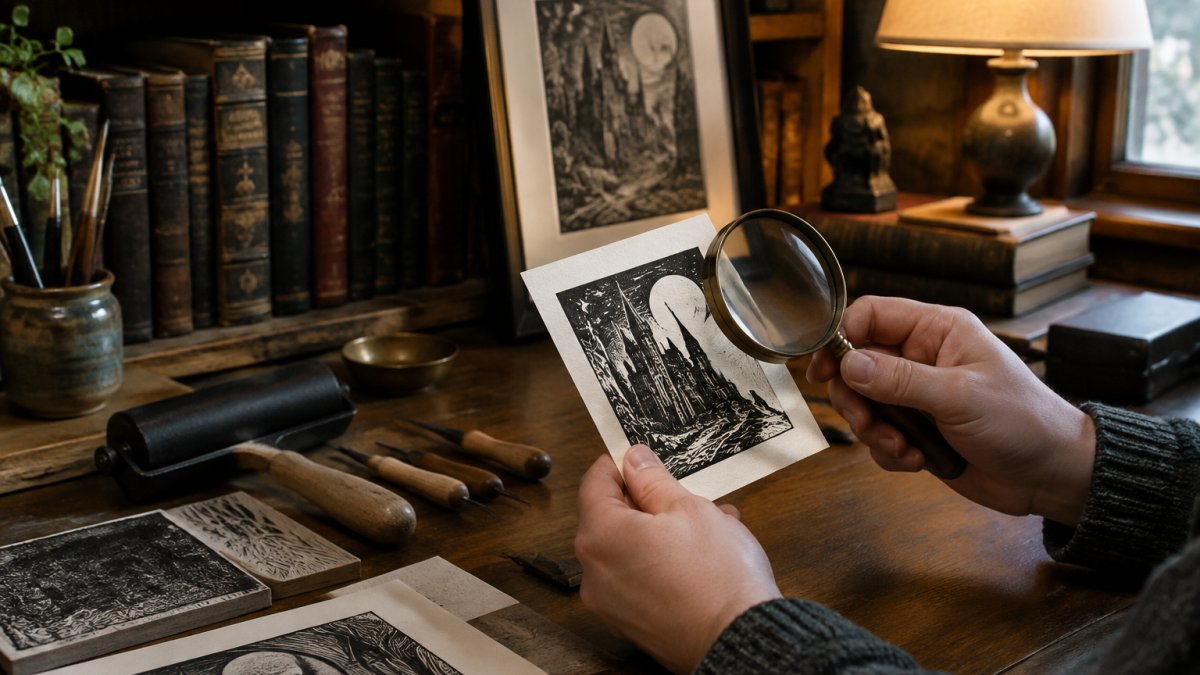
Start with the technique statement.
Next, look for process evidence.
Check the paper and ink specs. Cotton rag or heavy printmaking paper can hold embossed plate marks and deckled edges.
Finally, compare image size to paper size. A hand-pulled print often has a border, and that border can be part of the composition.
Run this checklist on any listing:
- Is the maker named, with process photos of carving or printing?
- Does the listing state the technique: linocut, intaglio, watercolor?
- Is the edition size stated, or is the piece one of a kind?
- Are paper type and ink described?
- Is the image size listed separately from paper size?
- Do reviews mention the actual piece arriving as shown?
A common mistake is assuming a high price means handcrafted. A $200 print-on-demand canvas can cost more than a $35 hand-pulled relief print.
The edition question matters.
Sizing, Framing, and Making a Gothic or Fantasy Piece Fit Your Space
Sizing and framing shape how a gothic or fantasy piece looks on the wall.
An image size that differs from paper size is common: a 5x7 image on larger paper gives you a border that suits a mat and frame.
Watch out: stretching or heavily cropping medieval-inspired art removes the borders and architectural framing that make the composition work. Choose a size that fits your wall rather than forcing the art into a frame you already own.
For placement ideas that blend old-world art into a contemporary room, our piece on ways to add medieval art to a modern home walks through styling options. If you are still deciding whether dark art suits your space at all, read whether gothic wall art prints are worth hanging in dark interiors.
Explore the Artwork at Modern Medieval Press
Each design is considered in the form it will finally take. A composition that works as a large print may need adjustment to work small, so sizes are chosen per design.
Our catalog runs from a $20 one-of-a-kind ornate medieval key linocut to the $150 Castle Architecture intaglio, and listings name the technique. If you are shopping for a reader in your life, our fantasy gifts for book lovers collection gathers the pieces that suit a library shelf.
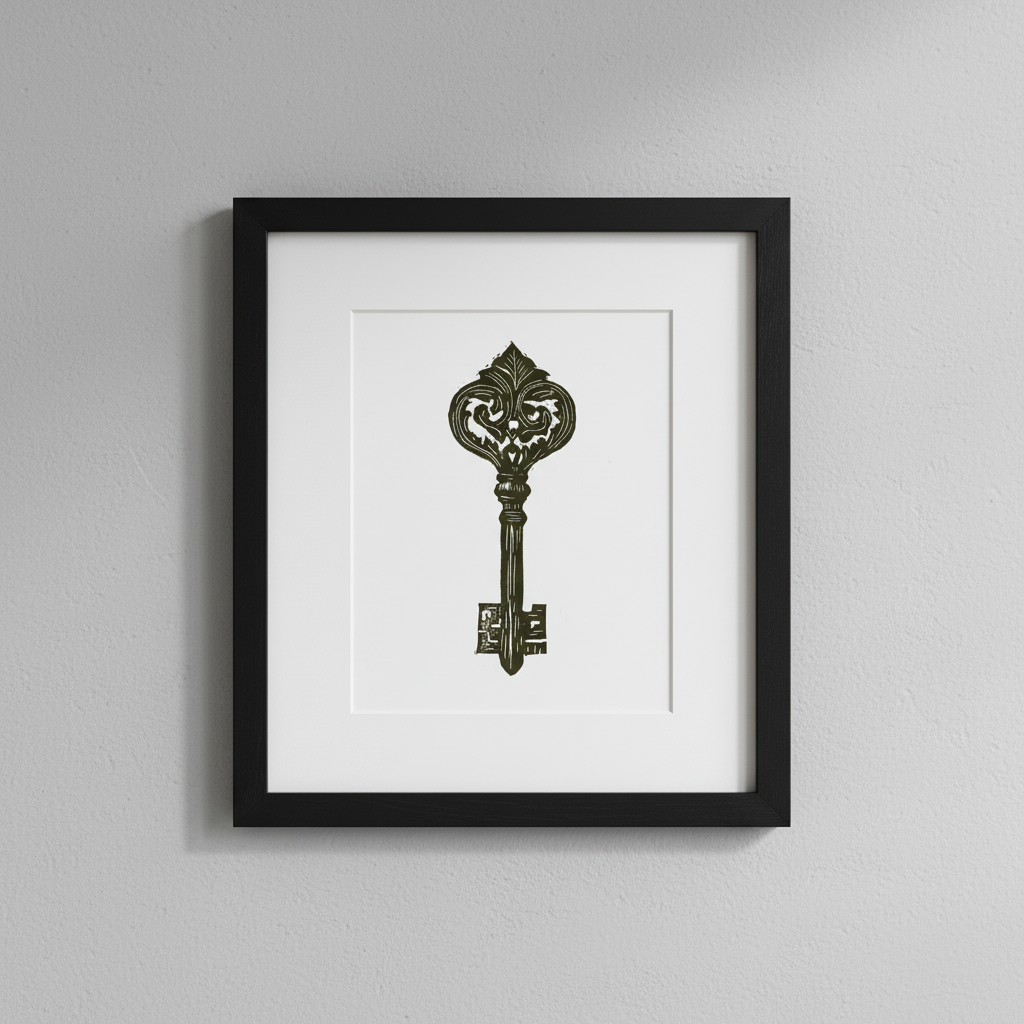
Browse the full collection of original prints and find the piece that turns a plain wall into a story.
The hardest part of collecting handcrafted art is trusting that what arrives matches what you saw.
Frequently Asked Questions
How can I tell whether gothic fantasy wall art is handcrafted or mass-produced?
Look for visible process marks: carved lines, uneven ink pressure, and slight variations between pieces. A hand-pulled linocut or intaglio print shows texture you can see up close. Ask whether the listing names the printmaking method, states an edition size, and shows the actual piece rather than a flat digital mockup. Print-on-demand art usually appears in dozens of sizes and products at once with identical, perfectly even surfaces. A seller who explains the method and edition is a stronger signal than any badge on the page.
Where can I find good fantasy art that does not look like generic decor?
Start with small studios and individual printmakers rather than large marketplaces, where the same design gets printed on mugs, pillows, and posters. Look for work rooted in a specific tradition, such as relief printing or hand-etched intaglio, since those methods leave marks a digital file cannot copy. Modern Medieval Press, for example, releases hand-carved linocut and intaglio pieces in editions as small as one, so the artwork keeps the character of the original carving.
Is original art worth more than a mass-produced print?
An original or limited edition holds value for two reasons: scarcity and craft. A piece from an edition of one or three cannot be bought again once it sells, and its surface carries marks from the actual printing process. Mass-produced prints can look sharp, but thousands exist. If you want a collectible that anchors a room, budget for an original or a small edition. If you want to fill a large wall on a tight budget, a reproduction still works as long as you know which one you are buying.
What should I check before buying handcrafted wall art online?
Confirm the image size separately from the paper size, since a border is common and affects which frame you need. Check the printmaking method, the edition size, and whether the piece is signed or numbered. Ask for a photo of the actual piece if the listing only shows a mockup. For small formats like 5x7 inches, plan the frame in advance so the art does not sit unframed in a drawer.
