

Last Updated: November 11, 2026
Quick Summary
To style dark academia decor, fix your palette first: roughly 60 percent charcoal or deep brown, 30 percent emerald, burgundy, or navy, and 10 percent warm metallic or cream. Then layer velvet and woven textiles, build a collected bookshelf, and light rooms with 2700K bulbs.
- Paint or fabric in soft charcoal creates a moody base that makes brass and paper tones glow.
- Fill roughly 70 percent of a bookshelf with real books and leave one gap per shelf for an object.
- Source brass, wood, and framed art secondhand from estate sales, charity shops, and online resale.
- Use 2700K bulbs in lamps and avoid 4000K and above in living and reading spaces.
- Renters can use matte peel-and-stick wallpaper on one accent wall without touching the wall.
Table of Contents
- Start With the Dark Academia Color Palette
- Layer Textiles, Wall Art, and Furniture for a Scholarly Room
- How to Style a Dark Academia Bookshelf
- Affordable Dark Academia Room Decor That Still Looks Collected
- Lighting, Renters, and Care: The Practical Side of Dark Academia Decor
- Choosing Your First Heirloom Piece
- Frequently Asked Questions
Start With the Dark Academia Color Palette
The fastest way to make a room read as dark academia is to fix the palette before you buy a single object. Dark academia decor is a styling approach built on deep, muted shades, traditional materials, and layered texture that suggest an old library or a scholar's study. Color sets the tone long before furniture arrives.
The Core Shades: Charcoal, Emerald, Burgundy, and Sepia
Charcoal does the heavy lifting. Paint or fabric in a soft charcoal gives you a moody base that makes brass and paper tones glow.
A simple ratio works well: roughly 60 percent charcoal or deep brown, 30 percent one accent from emerald, burgundy, or navy, and 10 percent warm metallic or cream. That balance keeps a room atmospheric instead of cave-like.
Adding Warmth With Brass, Mahogany, and Candlelight Tones
Cold rooms kill the aesthetic. Brass frames, mahogany furniture, and warm amber light pull a dark palette back toward cozy. Aim for a bulb temperature near 2700K in lamps, which casts the golden hue of candlelight rather than office blue-white.
Watch out: painting every wall the same dark shade with no warm metal or wood to break it up leaves the room flat and heavy. One brass lamp or a single mahogany side table changes the whole read.
Layer Textiles, Wall Art, and Furniture for a Scholarly Room
Layering separates a styled room from a themed one. A scholarly space has depth: something soft underfoot, something woven at arm's reach, and something framed at eye level. Build in that order and the room assembles itself.
Velvet, Tapestry, and Woven Cotton: Where to Spend and Where to Save
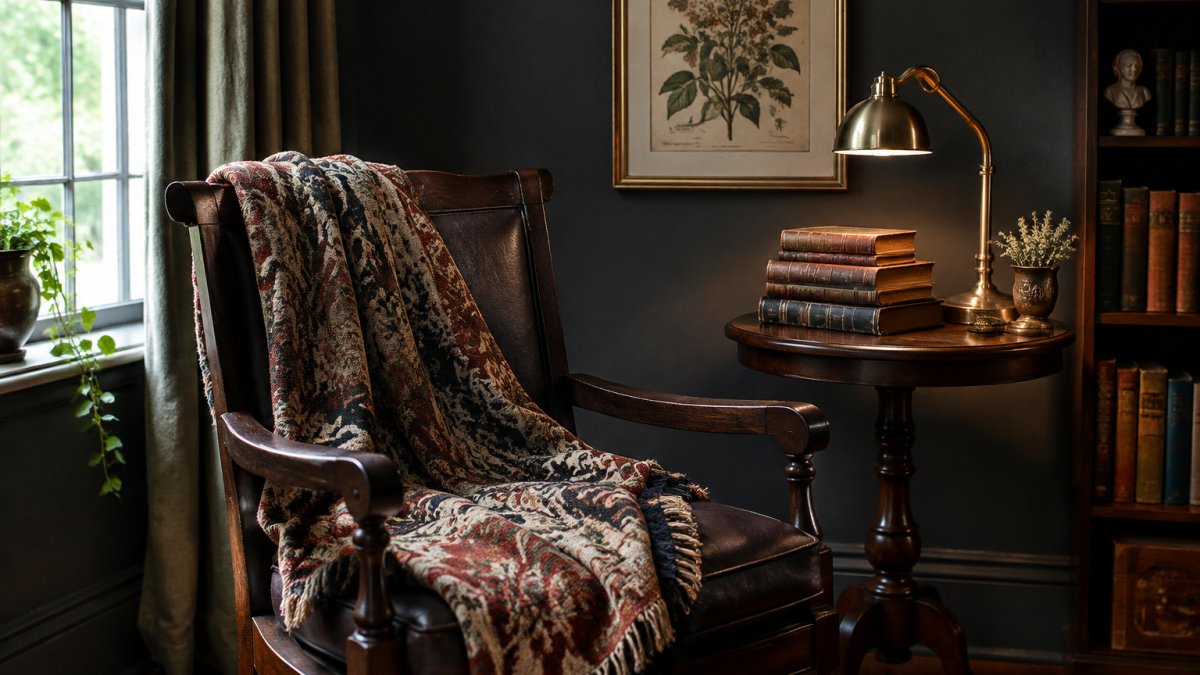
Spend on pieces your hands touch and save on the rest. A velvet cushion or upholstered chair earns its cost because velvet catches light and adds the sumptuous texture the style depends on.
Where to save: mass-produced "vintage-style" frames and printed canvas. Where to spend: one woven textile with real thread texture, like our Celtic Tree of Life woven blanket, which is 100 percent cotton with the artwork woven into the fabric rather than printed on top.
Hanging Prints and Building a Gallery Wall Without Clutter
Hang fewer pieces, larger. A gallery wall fails when every frame fights for attention. Pick one anchor print, then add two or three smaller pieces that share a palette.
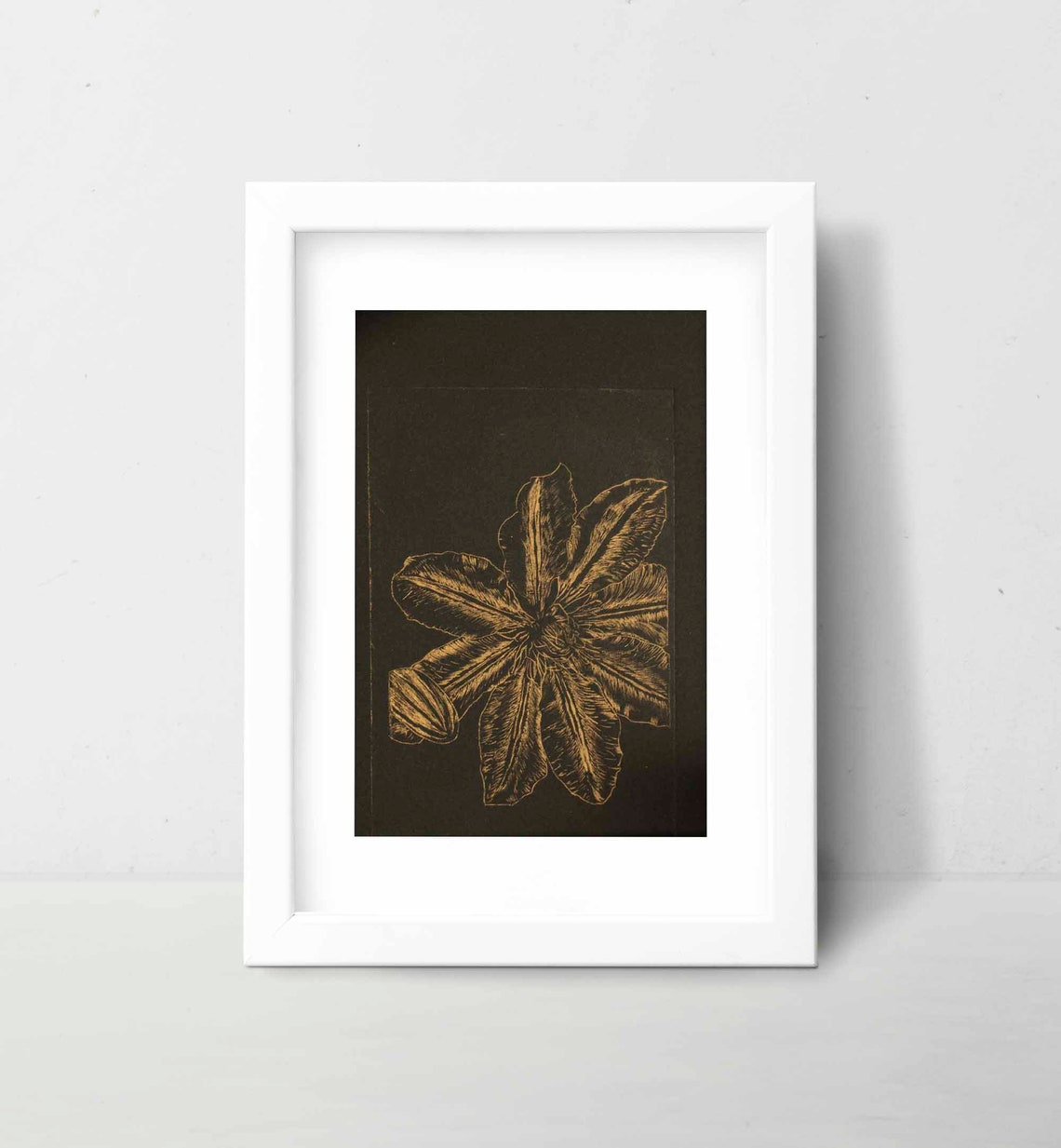
Keep the image itself intact. Our medieval botanical flower wall art print is designed to sit in a gallery wall as a single strong botanical note, and a framed gold-on-black lily print adds contrast without clutter.
How to Style a Dark Academia Bookshelf
A dark academia bookshelf looks collected, not arranged: books at different heights, a few objects breaking the rows, and nothing perfectly symmetrical.
- Start with books, not decor. Fill roughly 70 percent of the shelf with real books, mixing leather-bound volumes, cloth spines, and paperbacks with the covers turned inward for a uniform look.
- Break the rows. Leave one gap per shelf for a small object: a brass figurine, a stone, a candle.
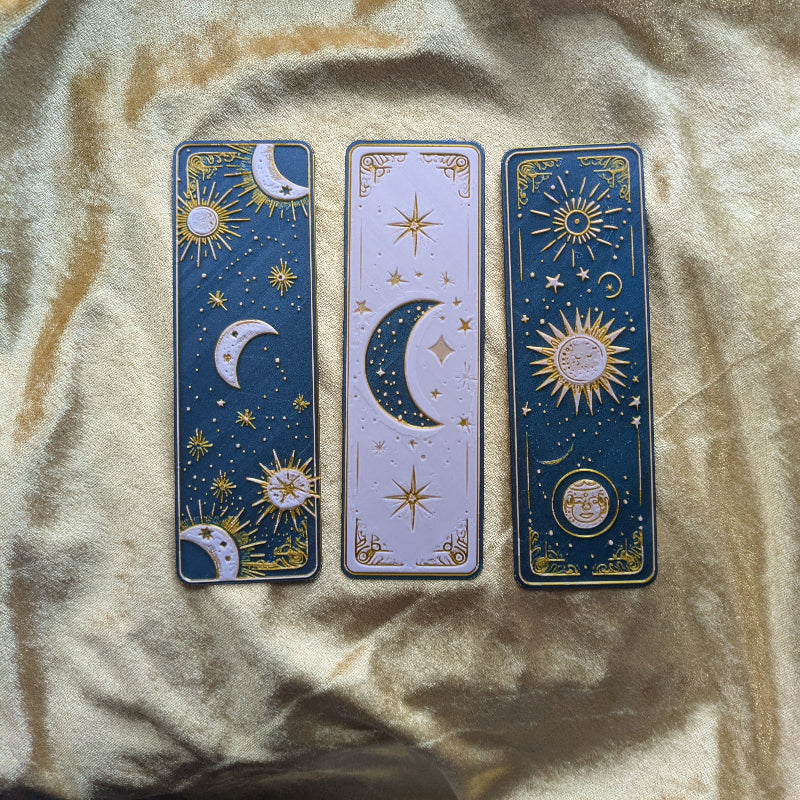
- Add one horizontal stack. Lay three books flat and top them with a small dish or a celestial bookmark set tucked into the pages.
- Keep the palette tight. Pull burgundy, charcoal, emerald, and cream spines forward; turn bright covers around.
- Light it low. A small warm lamp on the shelf beats overhead light for atmosphere.
Affordable Dark Academia Room Decor That Still Looks Collected
Cheap decor looks cheap when it is new, shiny, and identical. The affordable route is texture and age, not volume, and the most reliable way to get both is to source secondhand and upcycle rather than buy new. That approach is also the most sustainable way to build the look, which matters to the people who gravitate toward this aesthetic.
Where to Source Secondhand and What to Pay Attention To
Estate sales, charity shops, and online resale marketplaces are the core sources for brass, wood, and framed art. At estate sales, arrive early for furniture and late for the smalls, when sellers discount boxes of candlesticks, bookends, and frames.
Judge condition by what you can fix. Solid wood with a worn finish can be waxed or oiled; lifting or chipped veneer is hard to repair and usually not worth it.
Upcycling Projects That Read as Collected, Not Crafty
The goal of upcycling here is to make a piece look older and more specific, not to add a handmade label. A few projects earn their effort:
- Reframe thrifted art in a solid wood frame you already own or find cheaply; matching frame profiles across a wall does more for a collected look than matching art.
- Turn an old wooden box or small crate into a shelf riser for a bookshelf, breaking up rows of books and giving small objects a stage.
- Use a worn scarf or length of vintage fabric as a table runner; the visible weave and faded color read as textile depth at almost no cost.
Watch out: distressing new furniture with sandpaper and dark stain rarely looks like age, it looks like damage applied on purpose. Buy genuinely old pieces for the aged look and reserve DIY for frames, risers, and textiles where the intervention is invisible.
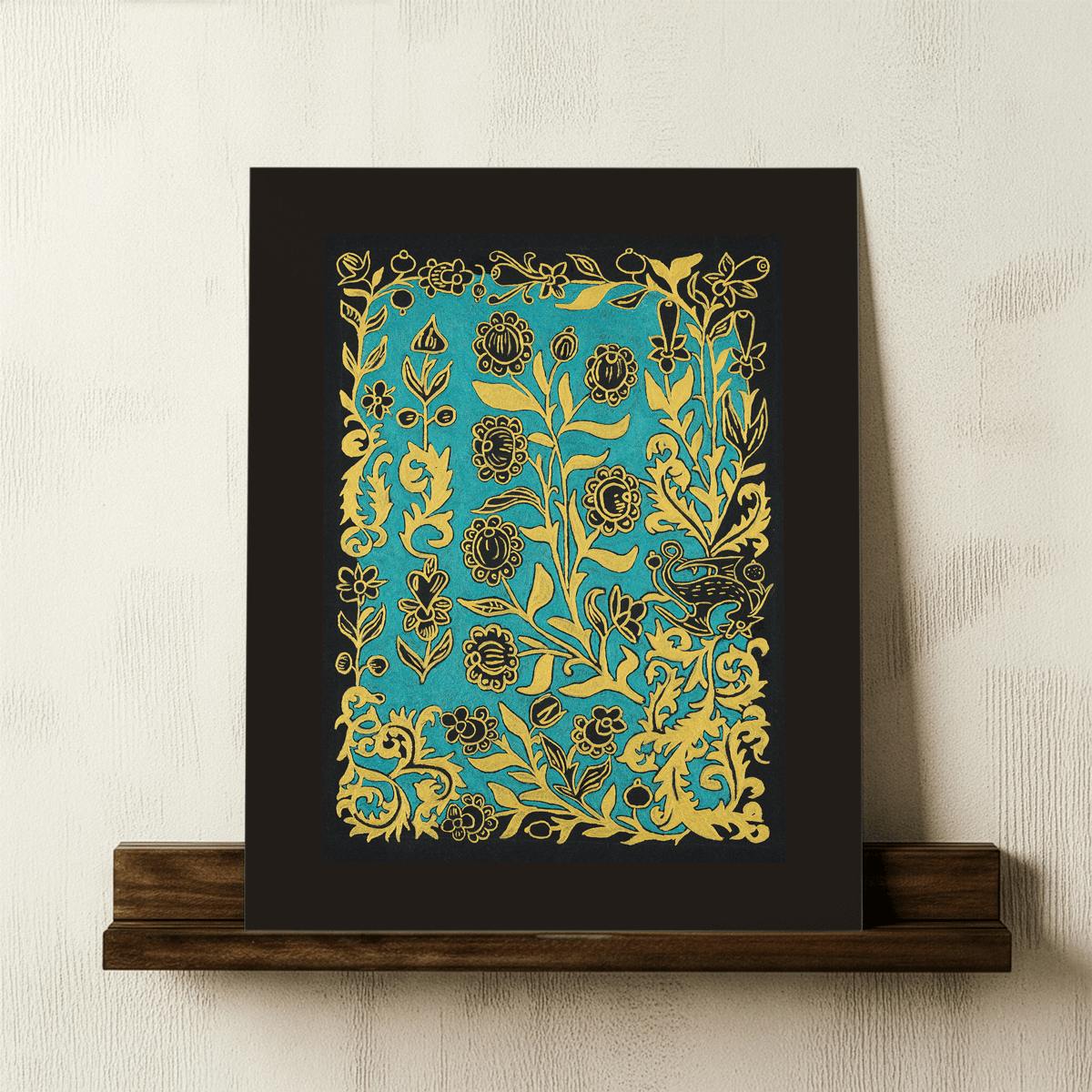
The Meadows After Dark fine art print is a fine art reproduction that features gold ink and hand-painted detail inspired by illuminated manuscripts.
Lighting, Renters, and Care: The Practical Side of Dark Academia Decor
Most styling guides stop at the mood board. The rooms that actually work solve three practical problems: light quality, lease restrictions, and upkeep. Handle these and the aesthetic survives daily life.
Lighting Technicalities: Bulb Temperature, Dimmers, and Shadow
Light decides whether dark academia decor feels cozy or gloomy. The single most useful number is color temperature, measured in Kelvin (K).
Layer light in three tiers rather than relying on one overhead fixture. Tier one is ambient: a single overhead or ceiling source on a dimmer. Tier two is task: a desk or reading lamp at 2700K to 3000K. Tier three is accent: two or three low lamps, a brass table lamp on a side table, a small lamp on the bookshelf, a floor lamp behind a chair, each at 2700K.
Put at least one circuit on a dimmer, so you can drop the ambient light after dark while keeping the low lamps on, the exact condition that produces the moody, shadowed look without making the room unusable.
Watch out: replacing every bulb with a very warm 2200K “candle” bulb makes a room feel orange and cramped, and it flattens the contrast between paper, brass, and wood that the style depends on.
Renter-Friendly Changes and Long-Term Care
Renters can get the full effect without touching a wall. Removable peel-and-stick wallpaper in a deep tone on one accent wall is the highest-impact change; choose a matte finish rather than glossy, because gloss catches light and reads modern rather than scholarly.
Care matters as much as setup. Dust woven textiles with a soft brush rather than a vacuum beater, which pulls threads and distorts the weave.
The article gives specific numbers for light quality, so here they are in one place.
| Item | Value | Note |
|---|---|---|
| Default lamp bulb | 2700K | Warm amber of candlelight |
| Desk task lamp | 2700K to 3000K | Slightly cooler for reading |
| Avoid in living spaces | 4000K and above | Turns blue-white, kills the mood |
| Decorative fixture only | 2200K | Orange and cramped if used everywhere |
| Light tiers | Three | Ambient, task, accent |
| Accent lamps | Two or three low lamps | Each at 2700K |
Choosing Your First Heirloom Piece
Buy one piece you intend to keep for decades before you buy ten you will replace. An heirloom piece should be something you can name the maker of, made with materials that age well, and sized to the wall it will live on.
Start with an original. Our Medieval Key linocut original artwork is carved, inked, and printed by hand in a 5x7 collector size, which makes it an honest first investment rather than a reproduction dressed up as one.
If you are still building the room around it, browse the full castlecore decor art collection to see how prints, blankets, and small objects sit together in one palette.
Building a room that feels like a scholar's study takes patience, and the pieces that carry it are the ones made with real materials and real intent.
Frequently Asked Questions
What are the essential elements of dark academia decor?
Dark academia decor rests on four elements: a moody color palette of charcoal, emerald, burgundy, and sepia; layered textiles such as velvet, woven cotton, and tapestry; vintage or antique wood furniture in mahogany and dark oak; and books displayed with intention. Wall art, brass hardware, and warm low lighting finish the room. You do not need all four at once. Start with the palette and one textile, then add pieces over time so the space feels collected rather than staged.
How can I achieve a dark academia aesthetic on a budget?
Spend on the pieces you touch and save on the ones you see. Affordable dark academia room decor comes from thrifted hardcover books, secondhand wooden frames, and small fine art prints, which at Modern Medieval Press are priced from $10.00 to $14.00. Paint a single accent wall in charcoal instead of replacing furniture. Shop estate sales for brass candlesticks and bookends. The look rewards patience: a room assembled over a year reads more authentically than one bought in a weekend.
How do I balance dark academia decor with modern home features?
Let the modern features stay quiet and give the vintage pieces room to speak. Keep walls and large surfaces in a single moody tone so a sleek radiator, outlet, or built-in shelf disappears into the background. Group antique objects in odd numbers on one surface rather than scattering them. A folklore-inspired print in a simple thin frame bridges both worlds, because the artwork carries the old-world character while the frame stays contemporary.
Will a dark academia room feel gloomy rather than cozy?
Gloom comes from flat, cool light, not from dark colors. Use warm bulbs around 2700K, add a dimmer, and place two or three small light sources at different heights instead of one overhead fixture. Layer texture so the eye has something to catch: a woven blanket, a fringed throw, a textured bookmark on the shelf. Dark walls plus warm light plus visible texture reads as cozy and scholarly rather than dim.
